Recently, while visiting family in Winnipeg, we had the opportunity to visit the Canadian Museum for Human Rights. The museum opened in 2014 and the website states the purpose of the museum to “explore the subject of human rights with a special but not exclusive reference to Canada, to enhance the public’s understanding of human rights, to promote respect for others and to encourage reflection and dialogue”. Speaking of my own experience there, it certainly fulfilled all of the goals of this purpose.
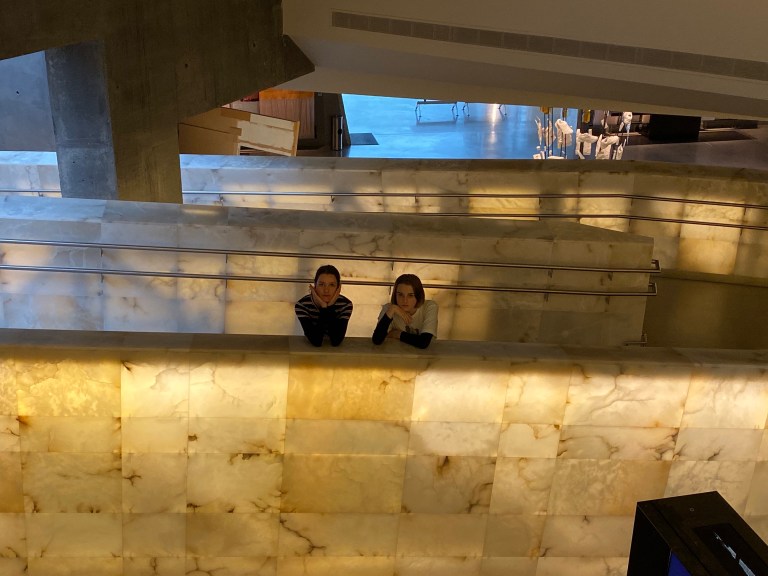
I love museums and have been to a number, but I would suggest that I have only encountered one other museum that moved me as this one did, and that is the Hiroshima Peace Memorial Museum. The Canadian Museum for Human Rights is a powerful, evocative, educational and emotional space. The only museum of human rights in the world, this space is beautiful as well as functional. The architecture of the building itself is visually stunning, it is circular and progressive, so there are no stairs and the walkways between spaces are made from alabaster and are spectacular.
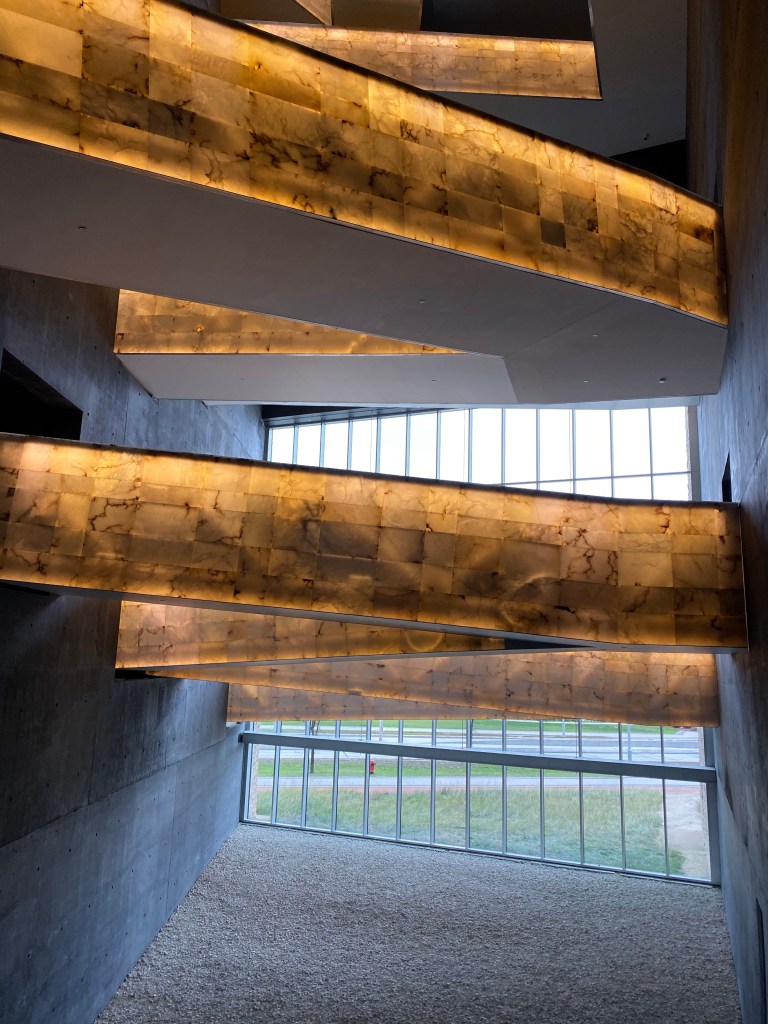
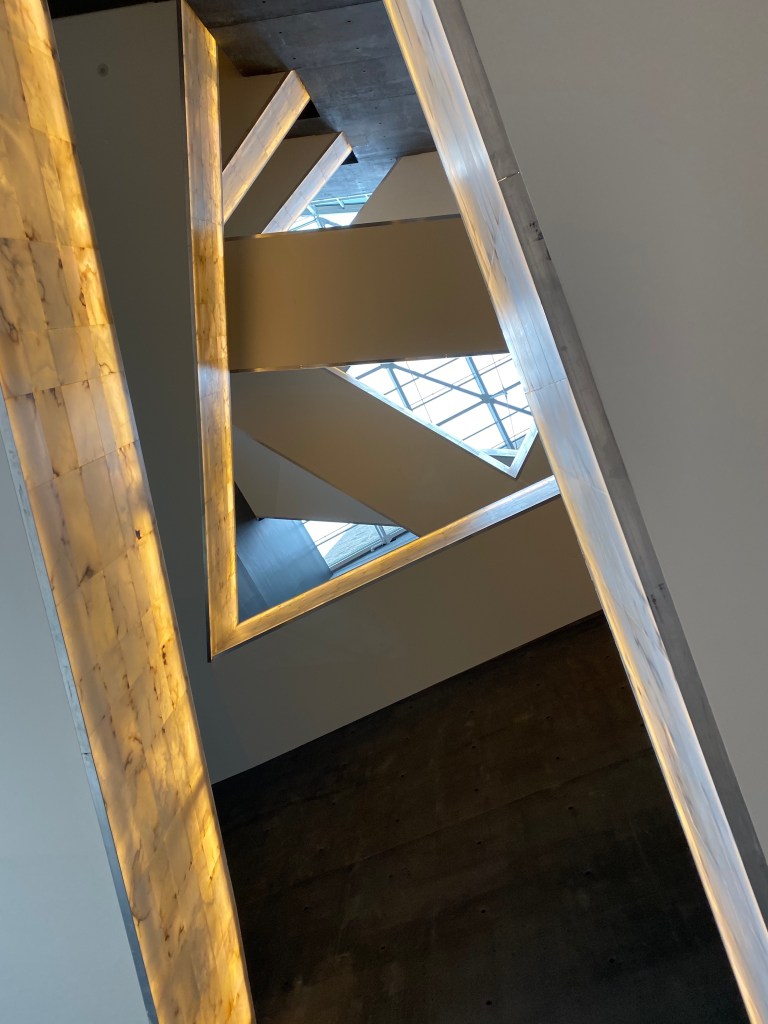
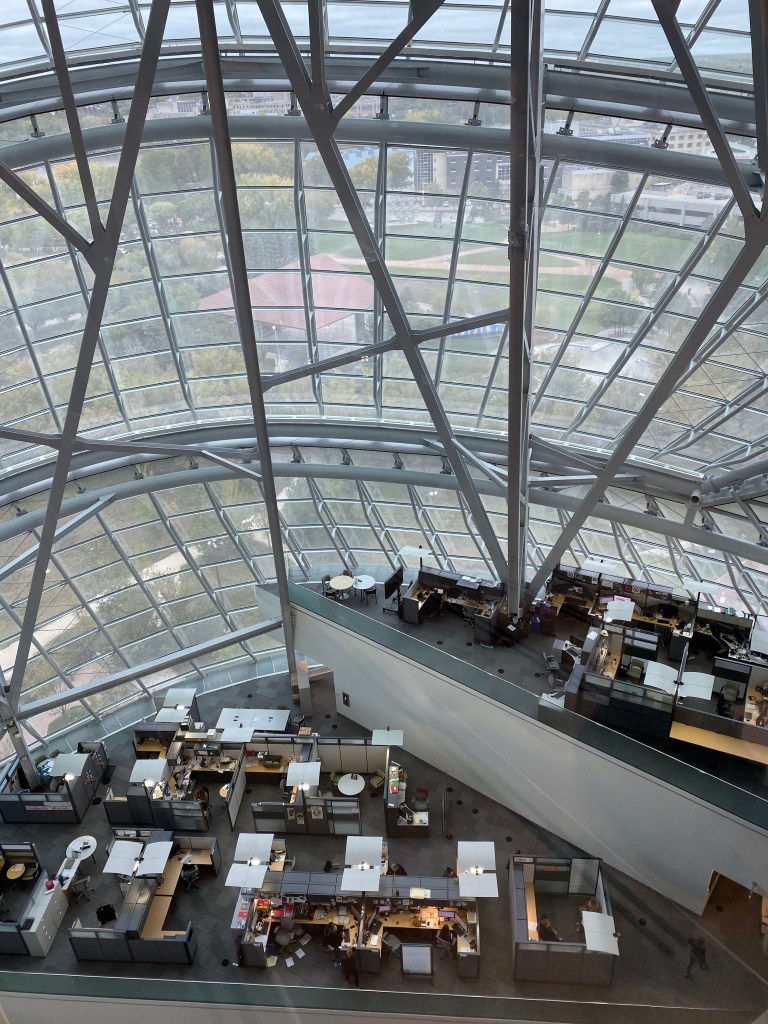
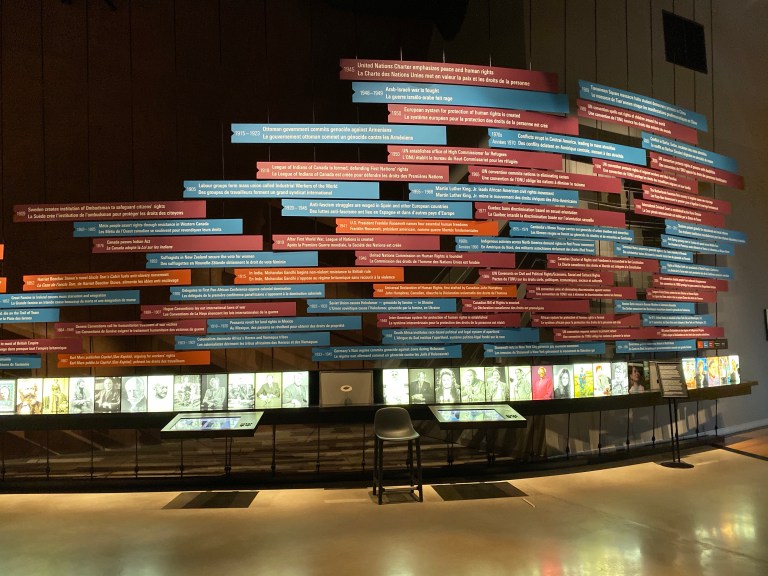
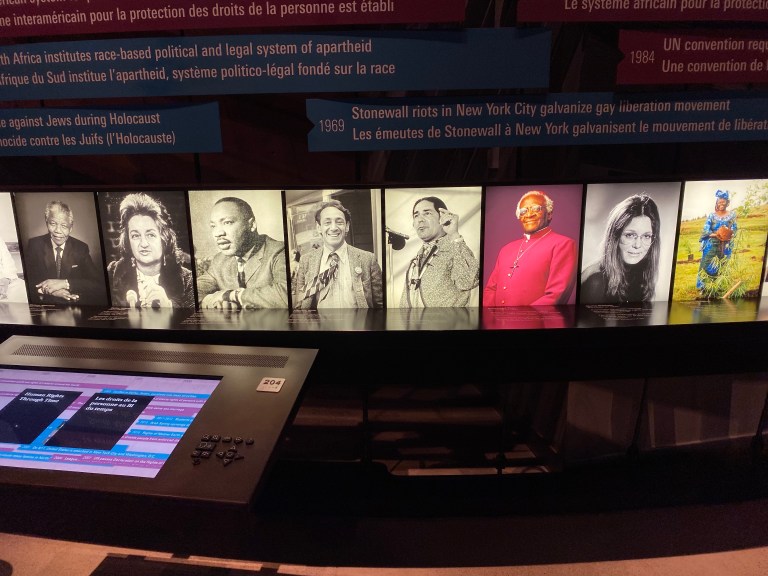
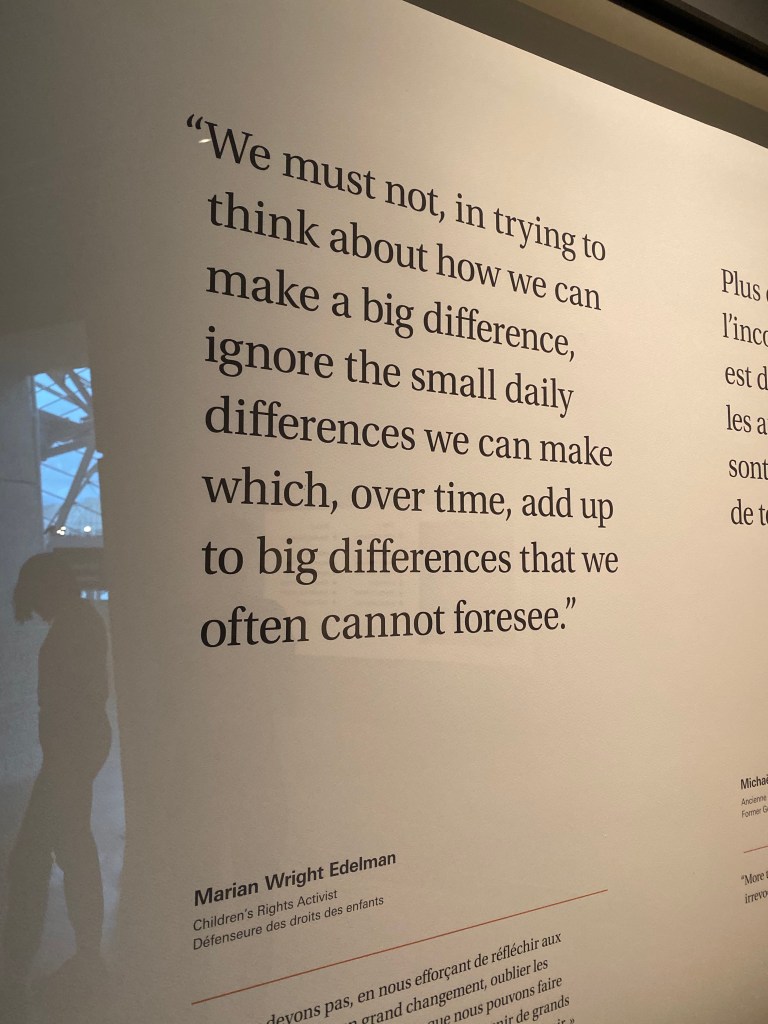
You enter the museum at the ground level and work your way up, to an exceptional view of The Forks and Winnipeg. The first exhibit was a multi-layered and colour coded timeline with pictures and artefacts of all of the historically significant political, social and humanitarian events and the people who have instigated the events and facilitated change in the world. It was excellent. There were so many inspirational and incredible people pictured and the amount of change that has come about through the power of people exerting their own human rights was encouraging and hopeful. The museum contains a lot of trauma and historical atrocity, yet the message is generally very uplifting.
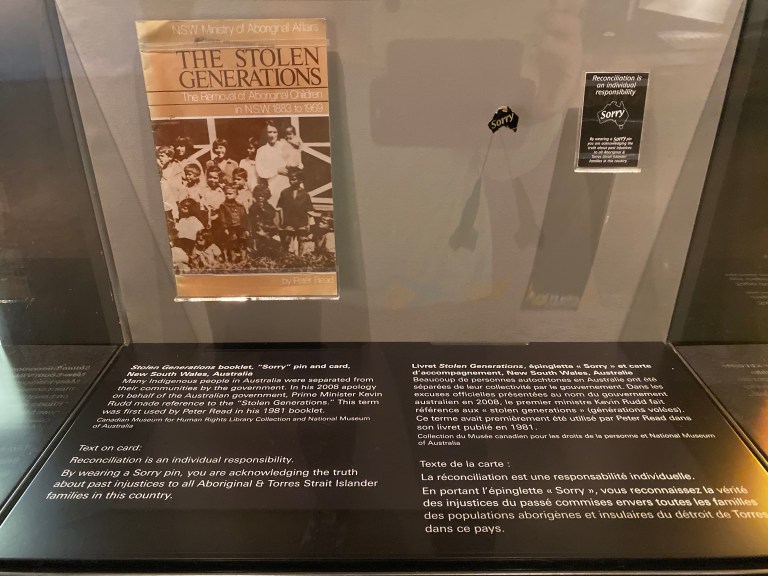
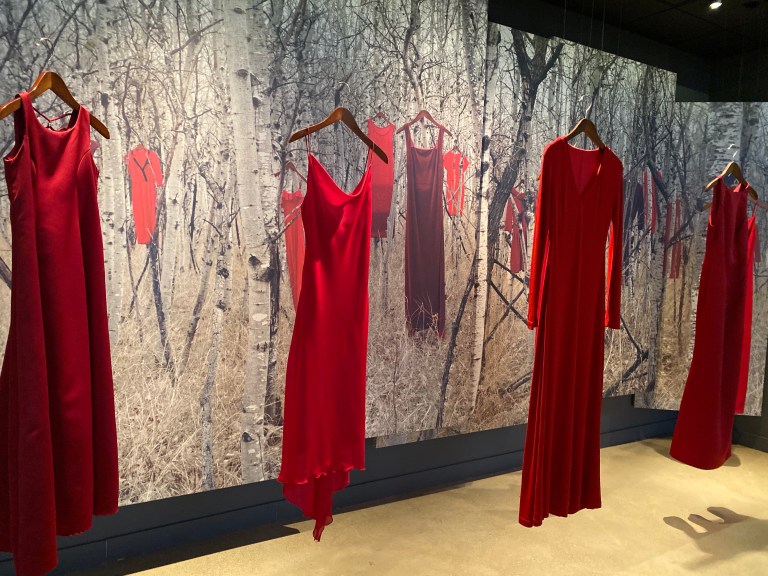
The next area was dedicated to human rights of many different groups in Canada. Canada has a very interesting history, and being Australian, I saw many similarities in many aspects of the Colonial history and in the treatment of Indigenous people. The Metis, the First Nations People and the Inuit are all represented in this room, as well as some of the injustices they have endured. Residential schools and the incidence of violence against and disappearance of women from these communities is confronting. There are the stories of the interned Japanese during World War 2 and the “head tax” that was paid by Chinese, a means to discourage them from coming to Canada as immigrants. A section dedicated to same sex marriage, which houses photos of Stu, my partner’s cousin with his husband, and other civil and human rights events particular to Canada.
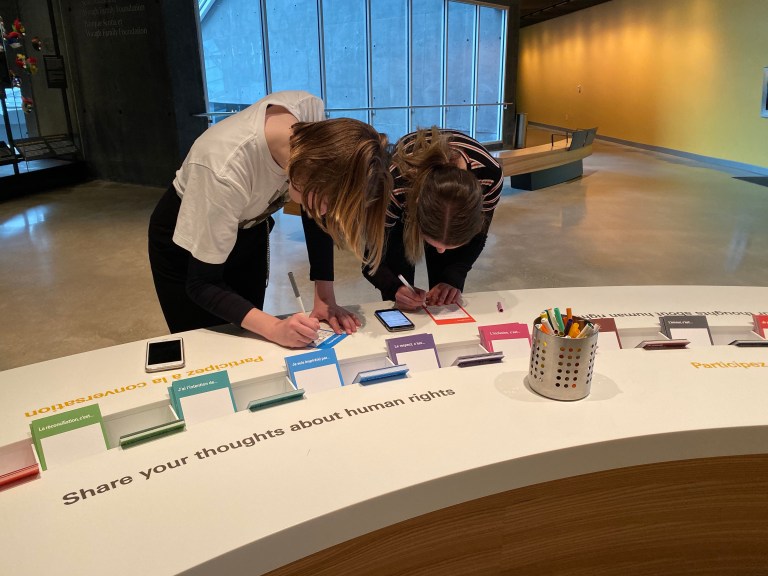
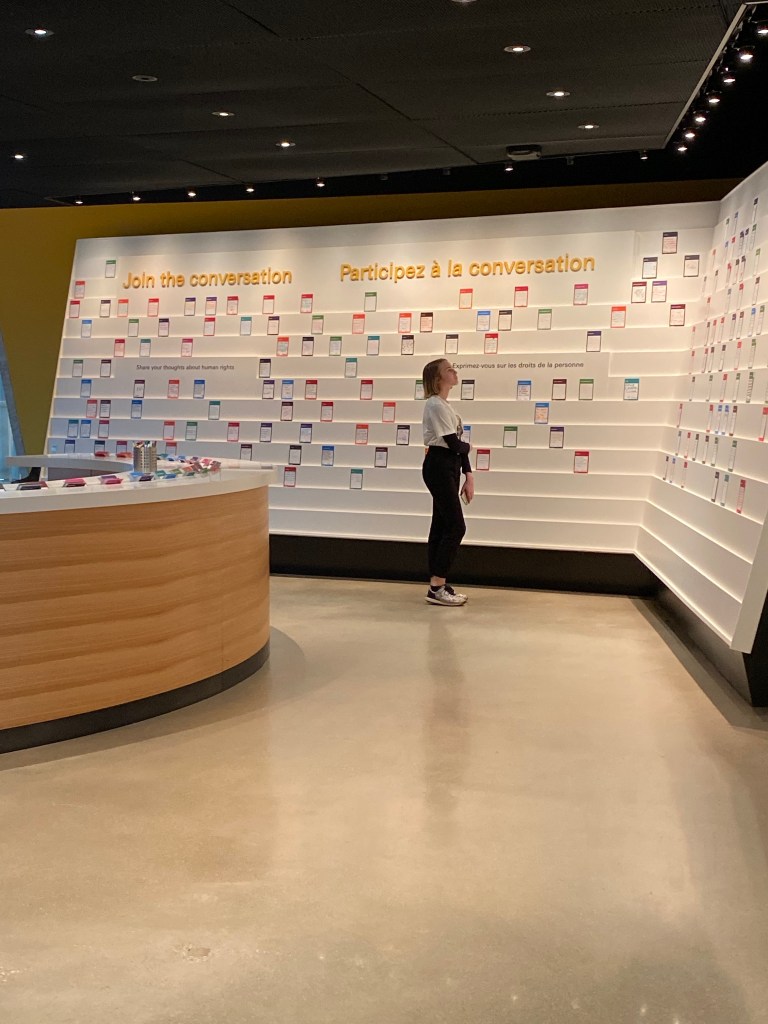
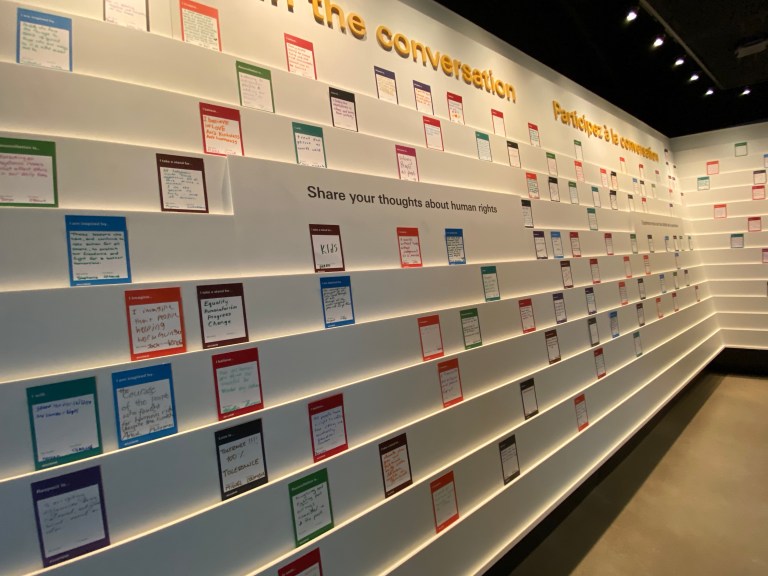
On the top floor of the museum there is a space to write your own thoughts, contributions, ideas and read those of other visitors. My experience of Canadian people, in general, is that they are so friendly and go above and beyond in all levels of all kinds of service, to a level that I had previously never encountered. The museum staff were no exception, and the woman working in this area was very lovely. She was telling us how inspiring it was to read the visitors contributions and that they changed every few days, so it was a dynamic exhibition, a visitors’ conversation. Mya and Abby added their thoughts to the conversation and spent some time reading other people’s cards, also.
If you are in Winnipeg or visiting, I highly recommend this excellent museum. They are open Tuesday to Sunday 10am-5pm. Starting from November 1, 2019, they will open Friday evenings until 9pm. The first Friday evening of every month you can gain free entry after 5pm and other Fridays the fee is $5, after 5pm. Visit the website for more information here.
 Blossomkitty Travels